
Our VP of Medical Education explores how evidence-driven program design and collaboration elevate patient outcomes.
This blog is the third in our 2025 Alliance Industry Summit (AIS) spotlight series featuring Medlive leaders behind our patient-centered education.
With over two decades of experience in scientific research and medical education leadership, Carole Drexel, PhD, brings both depth and creativity to her role as VP of Medical Education at Medlive. She is passionate about designing educational programs that bridge critical care gaps, measure real‑world impact, and elevate patient outcomes. Drawing on collaborations with academic institutions, professional societies, health systems, and patient advocacy groups, Carole’s approach ensures every program is rooted in both evidence and empathy.
Ahead of the 2025 Alliance Industry Summit (AIS), she shares her perspective on how thoughtful educational design can drive smarter, more patient‑centered education (PCE).
Q: At Medlive, we believe education is one of the most empowering tools we have. In the spirit of learning, what’s a topic you could give a spontaneous 5‑minute presentation on?
Carole: I could easily give a quick talk on the life of domestic rabbits, a topic that combines exploration, continuing learning, and emotion, with a surprising amount of practical insight. These creatures are amazing, so smart, so loving. It’s a nice reminder that learning happens everywhere, not just in the classroom or clinic.
Q: You’ve led the Medical Education team in designing programs across a wide range of therapeutic areas. In that time, what’s been the most significant change in how you approach educational design, and what do you think sparked it?
Carole: In recent years, educational design has shifted toward single lectures with audience response system for engagement, to a much more patient centered approach. We’ve moved beyond one‑size‑fits‑all education to strategies that adapt to learners’ needs and contexts while putting the needs of the patient first. The spark for this change came from adult learning research and the growing need to create urgency among clinicians to change clinical practice patterns and make patient focused individualized decisions. After all, clinical care is not a one size that fits all anymore, we are fortunate to have choices for many diseases. If clinical care is not one-size-fits-all, neither should education be.
For us at Medlive, this means integrating the patient voice and real‑world context into every stage of program development. We continuously discuss with patient advocacy groups to learn about the needs of their members, we develop surveys that we distribute with the help of our advocacy partners to dig deeper into these needs, patient preferences and learning capacity, we interview patients, and incorporate these insights into impactful, patient centered, practice changing CME education. We want clinicians to leave an activity not only with updated knowledge, but also with the tools and confidence to apply it in ways that directly benefit their patients.
Q: One of the big themes at AIS this year is using data and outcomes to drive smarter, more patient‑centered education. Can you share an example of how learner data or patient outcomes have influenced your educational design?
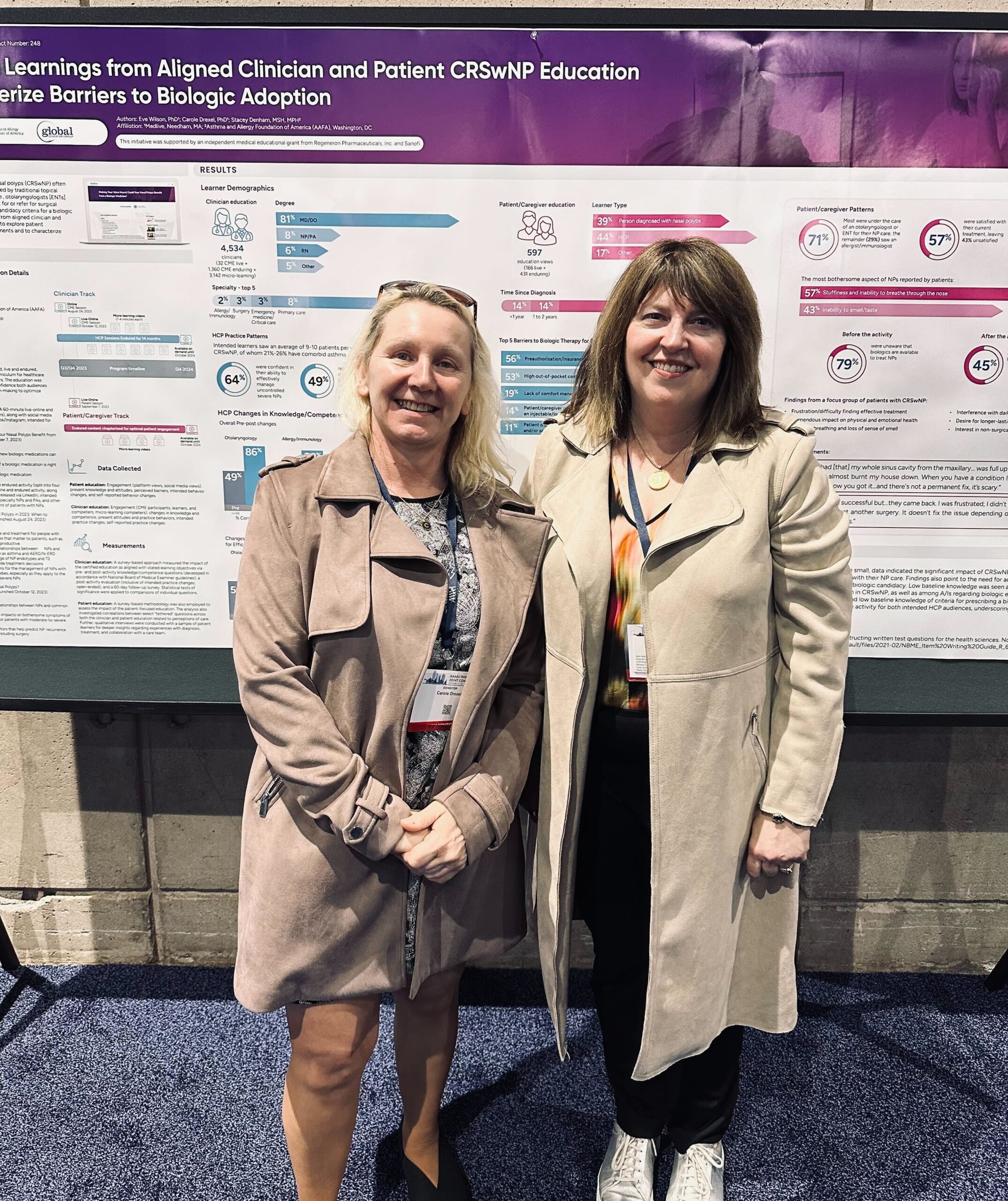
Carole: A powerful example is our expertise in programming for immunology driven diseases. Our most important patient partner for these programs is the Asthma and Allergy Foundation of America (AAFA).
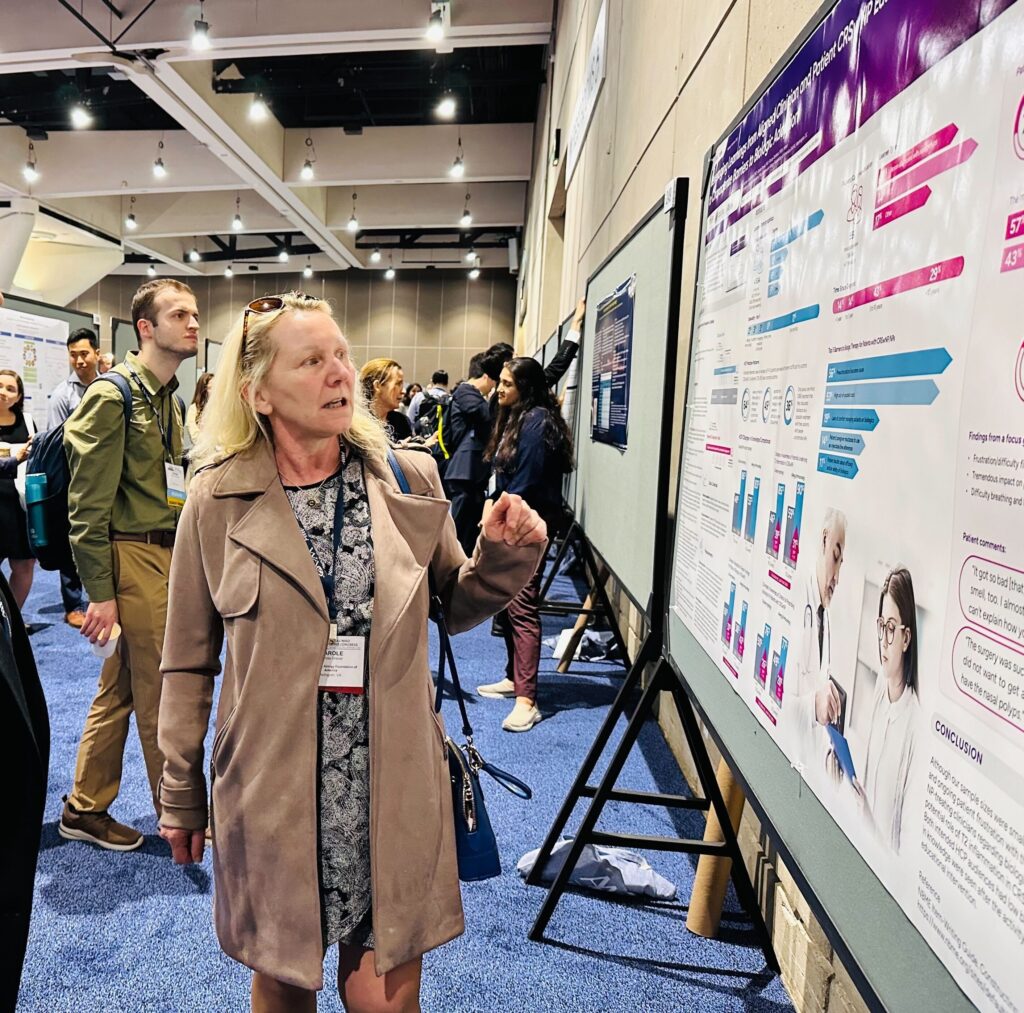
Our outcomes team, led by Jason Olivieri, has recently completed a meta-analysis of outcome data from several educational programs to patients and health care professionals. We analyzed the data from thousands of patients and health care professionals who have participated in education since 2020. This is what we found regarding the patient journey:
- In 2021 patients reported lack of understanding of their disease and treatment options.
- By 2022-2023 patients had better understanding of their diseases and treatment options but didn’t know how to communicate with their HCP about symptoms or voice their preferred treatment.
- By 2024 patients and caregivers reported high levels of confidence in communication with HCP and shared decision making.
Year over year, these evolving insights about patient needs directly informed clinical learning objectives across several CME programs, focusing on:
- 2021: Pathophysiology across several allergic diseases
- 2022 – 2024: Guideline based management
- 2024 –2025: Importance of treatment individualization to achieve patients centered of treatment goals
Over the years, we designed educational interventions to empower heath care professionals to address evolving patient needs and capacity for learning and partnered with AAFA to amplify its reach.
The result was a strong alignment between what we taught and what clinicians needed to achieve better patient-centered outcomes. It underscored the value of designing with data and the lived journey of patient in mind from the start.
Q: Which AIS sessions are must‑attends for understanding how educational design can drive smarter, more patient‑centered programs?
Carole: I’m especially looking forward to Strategic Thinking Behind Instructional Design and Its Goal: Impact on Patient Outcomes led by Kim Storck, PharmD, RPh, Sarah Atwood, Nimish Mehta, PhD, MBA, CHCP, Margaret Harris. This session will dig into proven design principles like anchored instruction, backward design, and situated cognition, all with a focus on driving real behavior change in clinical practice. It’s a great opportunity to see how to connect storytelling with real‑world applications in ways that truly support better patient care.
Another must‑attend is From Insight to Impact: C‑Suite Payer and Provider Stakeholder Education Exchange led by Terry Richardson, PharmD, BCACP, Steve Casebeer, MBA, Samantha Lansdowne, MSJ, MBA. It’s a powerful example of how collaborative stakeholder education can address emerging access and quality challenges, reduce variation, and strengthen care equity.
I’m also intrigued by Leen Alysaseen’s session, Leveraging Artificial Intelligence to Translate Faculty Insight into Strategic Education Design. The potential for AI to synthesize faculty expertise into targeted, outcomes‑driven education is exciting and highly relevant to the future of medical education design.
Overall, educational design is where strategy and empathy meet. By blending evidence‑based instructional approaches with insights from real learners and patients, we can create programs that don’t just inform, they transform. AIS 2025 will be an important opportunity to explore how to keep pushing that mission forward.
Don’t miss us at AIS
The MedliveCME team will be attending the 2025 Alliance Industry Summit (AIS) this September 8th through the 10th in Philly.
The Medlive team will be at AIS ready to connect, collaborate, and explore new ways to create high‑impact, patient‑centered education. We look forward to seeing you in September!